How to Study for a Level 3 Qualification in the UK: Tips for Vocational Learners
By Ayo Bamgbose ACIM, Assoc CIPD, MA, MSc, BSc
Have you ever felt unsure about balancing your studies while pursuing a career? Studying for a Level 3 qualification doesn’t have to feel overwhelming—it’s about strategy, focus, and understanding the unique demands of vocational education.
What is a Level 3 Qualification in the UK?
A Level 3 qualification is equivalent to A-levels in the UK, providing the foundation for further education or career progression. It’s a step up from GCSEs (Level 2), with a focus on independent learning, critical thinking, and practical skills application. Vocational Level 3 courses, like the CIBTAC Award in Education and Training, are designed to prepare learners for real-world roles in industries such as beauty, spa, and wellness. They’re often more hands-on compared to academic qualifications, offering direct relevance to your future career.
How Studying for a Vocational Qualification Differs from Academic Study
Vocational qualifications prioritise practical application and industry relevance. Unlike academic courses that rely heavily on essays and exams, vocational courses often include assignments, real-world scenarios, and assessments like micro-teaches. You’ll learn skills that directly relate to your career while demonstrating your abilities through projects, presentations, and interactive learning.
How to Study Effectively for a Level 3 Qualification
Studying Online:
Create a Routine: Set specific days and times for study to maintain consistency.
Use Resources Wisely: Regularly check Google Classroom (or your course platform) for updates, feedback, and deadlines.
Engage with Your Learning Platform: Regularly check Google Classroom (or your course platform) for updates, feedback, and deadlines.
Plan for Independent Research: While vocational courses provide structured resources, going beyond the materials can deepen your understanding.
In-Class Study:
Participate Actively: Ask questions, engage in discussions, and share your experiences with peers.
Take Advantage of Peer Support: Collaborate with classmates for study sessions or practice assessments.
Focus on Practical Application: Use class time to refine skills you’ll need for your career, like delivering presentations or handling specific tools.
Tips for Writing at a Level 3 Standard
Clarity Over Complexity: Keep your writing clear and concise. Focus on answering questions directly and providing relevant examples.
Use Credible Sources: While Harvard referencing isn’t always required, it’s good practice to credit authors when using their ideas or research.
Follow Assignment Criteria: Carefully read the marking criteria to ensure your work aligns with what’s expected. Many courses provide detailed rubrics to guide you.
Review and Revise: Proofread your work to avoid small errors, ensuring it’s polished before submission.
Additional Tips for Vocational Learners
Embrace Feedback: Feedback is an essential part of the learning process. Use it constructively to improve.
Manage Time Wisely: Break larger tasks into smaller steps and set deadlines to stay on track.
Focus on Practical Outcomes: Always consider how what you’re learning applies to your future role. For example, think about how a micro-teach or a reflective journal will prepare you for teaching in real life.
Studying for a Level 3 qualification is an exciting opportunity to develop both personally and professionally. Whether you’re learning online or in a classroom, focus on building practical skills and demonstrating them effectively. Remember, this journey is about equipping yourself with the tools and knowledge to step into the next stage of your career.
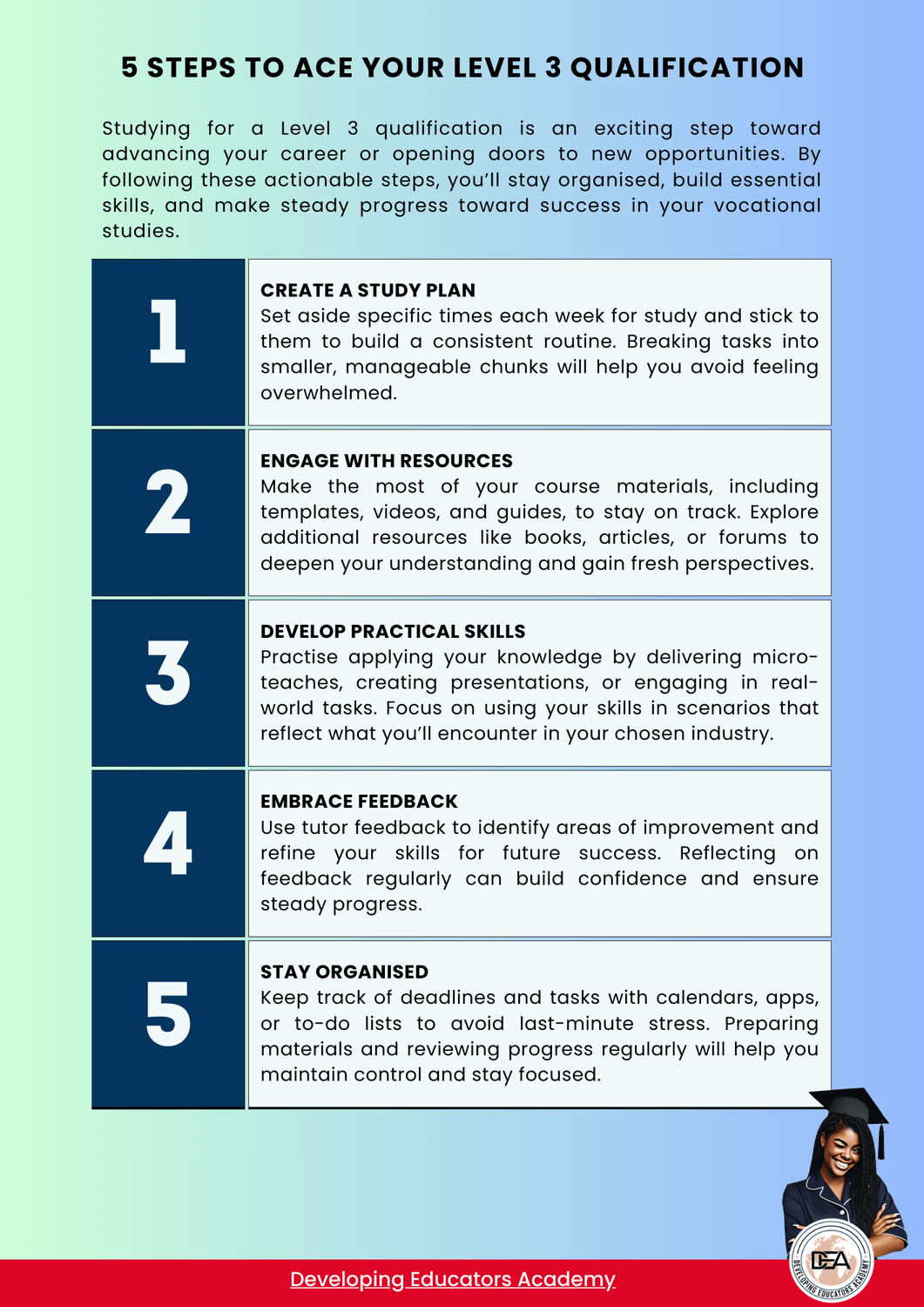
To recap, these five steps can guide you toward success in your Level 3 qualification. Save this for quick reference as you progress through your course.
What’s next for you? Share your thoughts in the comments or download our brochure for more tips and resources.